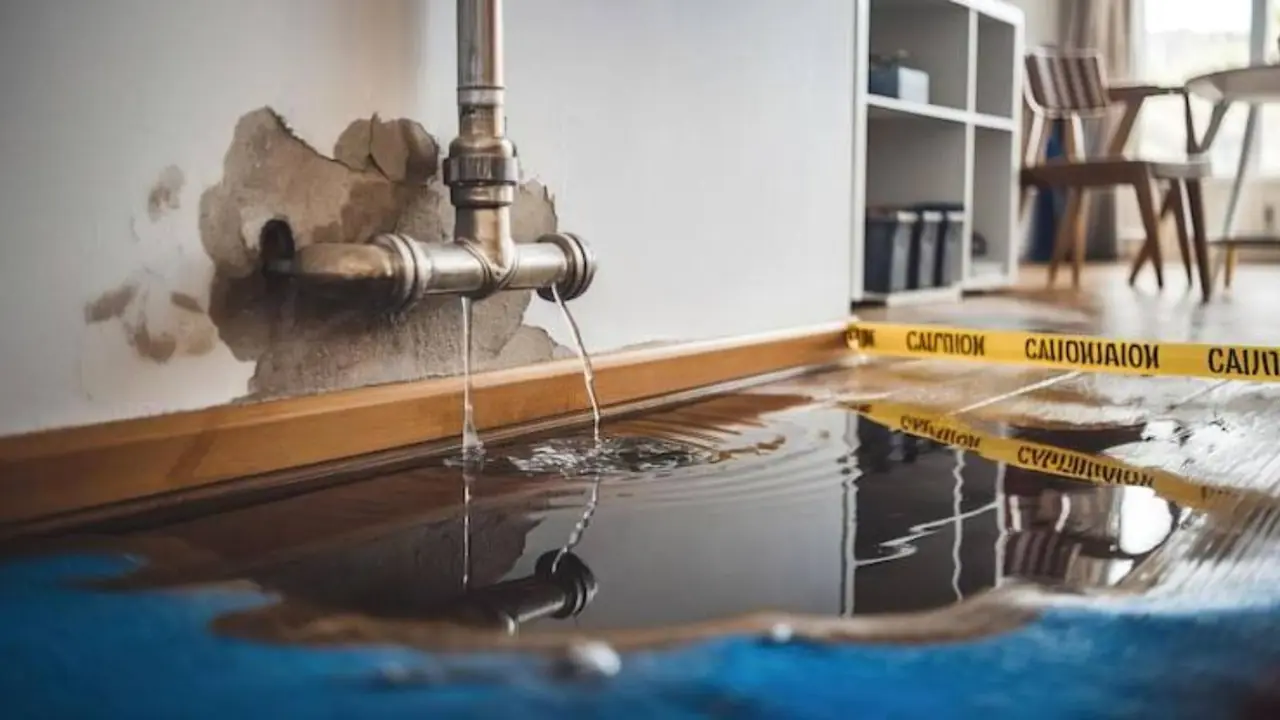
The leak that comes from the air conditioner
Air conditioners remove moisture from the air as they cool it. That water collects in a pan and leaves the house through a condensate drain line. When the line clogs, the pan overflows and the water goes wherever gravity takes it, which is often a ceiling, a hallway closet or an attic floor.
People are often surprised that this is a water damage problem. The water is clean at first, but a slow, repeated overflow soaks drywall and insulation, and the damp, dark space around an air handler is a place where mold can start. A wet spot in a closet that houses the unit is a classic early sign.
Signs your condensate line may be backing up
- A damp spot or brown stain on a ceiling below an attic air handler.
- Water pooling around the base of an indoor unit in a closet or hallway.
- A musty smell near the closet that holds the air conditioner.
- A float switch that shuts the system off, so the house suddenly stops cooling.
- Carpet at the closet edge that feels wet or has lifted from the wall.
In many homes the first clue is a system that quits on a hot afternoon. A safety switch in the pan can shut the unit down when it fills, and the house warms up while the pan sits full.
Hardwood and laminate floors near the unit also react quickly. Boards can cup, which means the edges rise as the wood takes on water from below.
What to do while water is still showing
Turn the air conditioner off at the thermostat so it stops producing more condensate. If a ceiling is bulging with water, place a bucket under it and do not poke a hole in a bulge near a light fixture or wiring.
Keep people out of any room where water is near outlets or a ceiling fan. If water reaches electrical equipment, shut off power at the panel only if the panel is dry and easy to reach, and call an electrician or emergency services for any electrical or gas concern before calling us.
Take photos of the stain and the unit. Dry what you can reach with towels, then call a crew if the ceiling is wet, the insulation is soaked or the damp area is larger than a dinner plate.
Ceiling dripping or a closet floor soaked? Call the 24/7 line and describe it.
☎ Call (760) 769-1159Drying standard to ask about
After a condensate overflow, ask whether the crew works to ANSI/IICRC S500, the published standard for water damage restoration. It treats a wet ceiling or closet as a drying job with readings taken at the start and again before equipment leaves, not a job that ends when the surface looks dry.
Coachella Local Note: a cooling-heavy climate
Coachella has a hot arid climate. The mean daily maximum temperature runs about 89 degrees Fahrenheit across the year, and the record high is 123 degrees. An air conditioner here runs for much of the year, so the condensate line works harder and clogs more often than in a mild coastal city.
Evaporative coolers, often called swamp coolers, are a separate system and also leak. A local roofer interviewed after Tropical Storm Rachel in October 2026 pointed to swamp coolers dripping onto roofs as one cause of weak, leaking roof material. Check which system you own, because the fix and the likely damage are different.
How the water spreads in a desert home
Many homes in Coachella sit on slabs, with the air handler in an attic or a hallway closet. When a pan overflows in the attic, water soaks insulation first and then travels to the ceiling below. When it overflows in a closet, it runs along the slab and wicks into baseboards and carpet.
Because the attic is hot, wet insulation can dry in part and look fine from below, while the drywall above it stays stained and weak. That is how a ceiling that seemed dry gets a new ring a month later.
Ceiling, closet or floor: what each problem needs
A stained ceiling usually needs the wet insulation removed and the board dried or replaced, which is the work behind water mitigation. A damp closet floor needs the carpet edge lifted, the pad checked and the baseboard dried.
If the unit is in a closet that has been damp for a while, look carefully for mold. The leak, not the weather, is the cause, and our mold remediation service starts by confirming the moisture source and the size of the affected area.
Preventing the next overflow
Ask your HVAC technician to clear the line, check the pan and test the float switch at each service visit. A mid-season cleaning matters in a city where the system runs most of the year.
Do not pour household chemicals into the line unless your technician says to. Never pour anything into a drain you cannot see into, and replace a cracked pan before it fails.
Renters should report any damp spot to the landlord in writing and keep the date. Property managers often arrange the HVAC repair, and the water cleanup should be done at the same time so the damp area is not covered up.
Insurance, in general terms
Sudden and accidental water from a failed component is often covered, while a leak that went unnoticed for a long time is often treated as maintenance. Read your policy and ask your insurer what applies to HVAC leaks. We cannot promise coverage.
Document the unit, the pan and the stain, and keep the HVAC invoice. For homes west of the city, La Quinta callers reach the same 24/7 line, and so do Indio residents.
Condensate line questions
Is an AC condensate leak covered by insurance?
Sometimes. A sudden failure is more likely to be covered than a slow leak that went unnoticed. Check your policy and ask your insurer, and keep photos and the repair invoice.
Can I clear a condensate line myself?
Some homeowners do, but the line can run through a wall or attic, and a wrong move can crack a pan or fitting. A technician can clear it safely and check the float switch at the same time.
The ceiling under my air handler has a stain. What should I do first?
Turn the system off so it stops making condensate, put a bucket under any drip and take photos. Then have the line cleared and the ceiling checked, because wet insulation above the stain often needs to be removed.
Why do condensate leaks seem to happen more in Coachella summers?
The system runs more often when the average daily high is around 89 degrees and the record is 123, so the line sees more water and more chances to clog. A seasonal service visit before the hottest months is a sensible habit.
Water showing at the air handler or ceiling? Call dispatch any hour.
☎ Call (760) 769-1159