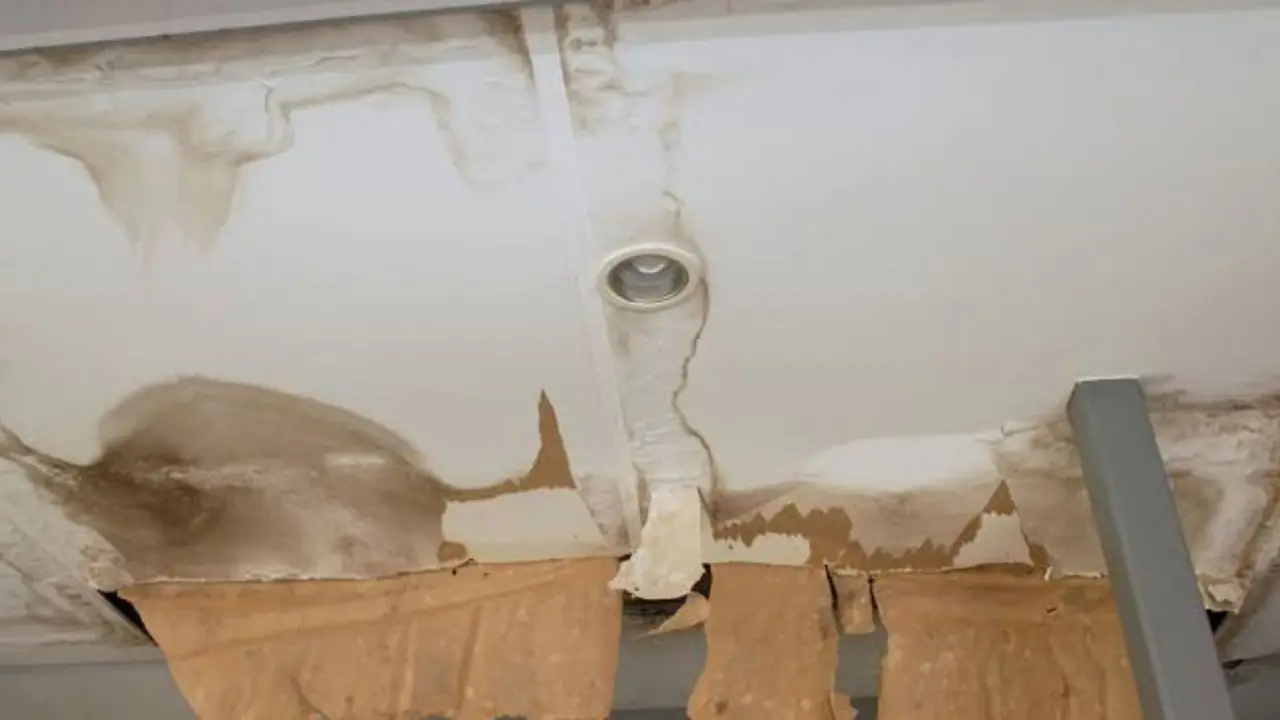
When water comes through a ceiling, most people picture a technician with a ladder and a bucket. The real process looks different. A restoration visit starts with finding where the water went, continues with drying the structure, and ends with rebuilding what had to be removed. Knowing the sequence helps you ask good questions.
This guide describes what each phase involves and roughly why it happens in that order. It is about how professionals work, so it complements our separate walkthrough on patching a ceiling yourself.
Phase one: the call and the safety check
The call usually begins with questions about where the water is, whether it is still coming in and whether any light fixtures are wet. If a ceiling is sagging or dripping near a fixture, the caller is told to keep people out from underneath and to turn off power only if the panel is dry and reachable.
Electrical or gas concerns go to the utility or 911 before anything else. Once the area is safe, the crew plans a visit. Arrival time depends on how many calls are active, so we do not promise a clock time, but same-day response is available when crews are free.
Phase two: finding the full extent
A technician maps the water using moisture meters and a thermal imaging camera. Wet drywall, damp insulation and a soaked wall below the ceiling are all recorded. The damage often reaches beyond the visible stain, so mapping decides how much needs to come out.
The crew also notes the type of water. Clean supply water is handled differently from water that crossed roofing or came up through a drain, and that category changes which materials can be dried and which must be removed.
| Phase | What the crew does | What you can do |
|---|---|---|
| Assess | Map moisture, identify the source and water type | Photograph the damage and share the date it started |
| Control | Extract standing water, protect floors, release trapped water safely | Keep people and pets out from under the area |
| Remove | Take out soaked drywall and wet insulation | Move belongings out of the room if possible |
| Dry | Run air movers and dehumidifiers, log readings daily | Keep doors closed and equipment plugged in |
| Rebuild | Hang, tape, texture, prime and paint | Approve texture and paint match |
Phase three: removal
Materials that cannot be dried reliably are taken out. That usually means saturated drywall and insulation, which hold water and sag. Removal is done carefully to limit dust and to stop water from dropping onto lower floors.
Taking material out also makes drying faster. Air can reach the framing directly, and the readings show quickly whether the structure is responding.
Water still coming through a ceiling? The 24/7 line can get a crew started on control and drying.
☎ Call (760) 769-1159Phase four: drying with equipment
Air movers push air across wet surfaces, and low grain refrigerant dehumidifiers pull moisture from the air so it does not settle elsewhere. The crew sets them according to the size of the affected area and the readings. Many homes need two to four days, and some need more, depending on how wet the materials were.
Daily visits record the readings. When the numbers match a dry reference reading from another part of the home, drying is considered complete. That paperwork is also the basis for a clear conversation with your insurer. Our water mitigation page explains how the drying plan is built.
Equipment stays running because a closed, air conditioned house can hold moisture that wet materials release. Unplugging a machine to save electricity usually extends the job.
Insulation and the attic
Insulation above a wet ceiling is often the hidden part of the loss. Fiberglass batts that have soaked up water lose their value and hold moisture against the board. Blown-in material can clump. If it is wet, it generally comes out and is replaced after drying.
Phase five: the rebuild
Only after the structure is dry does reconstruction start. New board goes up, joints are taped and finished, texture is matched and the ceiling is primed and painted. Stain-blocking primer is used where discoloration may bleed through.
A crew that handles repair work can rebuild in the same visit sequence, which helps avoid gaps between the drying and the final finish.
Safety Checklist While You Wait
- Keep people out of the room if the ceiling is bulging or sagging.
- Place a bucket and tarp under drips, and puncture nothing unless a pro tells you to.
- Switch off ceiling lights and fans that sit under a wet area.
- Move furniture and electronics out of the drip line.
- Photograph the ceiling before any cleanup, then call the 24/7 line.
Coachella Local Note: Utilities, Housing and Recent Storms
The City of Coachella Utilities Department provides water and wastewater service for city customers. If a main break or sewer overflow is the cause of water entering a home, the department lists separate standby lines for those emergencies on its website, and its office is closed on Fridays.
More than 10,000 housing units now exist in the city, and thousands of single-family homes and apartment complexes have been built since 2000. Newer ceilings usually sit under roofs and attics built to modern practice, so a leak often traces to a roof penetration, a flat roof section or an air conditioner line rather than to old plumbing.
Remnants of Tropical Storm Rachel crossed the valley in October 2026, and a roofer described leaks that continued for days because water remained pooled on flat roofs. If a ceiling is still dripping long after rain stops, check the roof for standing water.
What this looks like across the valley
In Indio, the same sequence applies to apartments and homes alike, as described on our Indio page. In Thermal, the process is the same even where distances are longer, and our Thermal water damage page covers what to expect.
Questions to ask any company
Ask whether the crew uses moisture meters and records daily readings. Ask which materials they plan to remove and why. Ask how drying will be proven complete, and whether crews work to the ANSI/IICRC S500 standard for water damage restoration. A clear answer to each one is a good sign.
Restoration Questions
How long does ceiling drying usually take?
Many jobs take a few days, and heavy saturation can take longer. Daily moisture readings decide when the structure is dry, not a fixed number of days.
Does all the wet insulation have to come out?
Insulation that has soaked up water usually does, because it holds moisture against the board and loses effectiveness. Light dampness is sometimes dried in place, and readings guide that decision.
Can I stay in the house during the work?
Often yes, though noise from the equipment and dust from removal can be a nuisance. If the area is large or the water was contaminated, a crew may recommend staying elsewhere for a short time.
What is the difference between restoration and repair?
Restoration stops the damage, removes what cannot be saved and dries the structure. Repair is the later rebuild of ceilings, texture and paint once everything reads dry.
If a Coachella ceiling keeps dripping after the rain has stopped, what should I check?
Check the roof for standing water, especially a flat section, and look at the cooler or air conditioner line above that room. After the October 2026 storm remnants, a valley roofer reported homes that kept leaking for days because water stayed on the roof.
Need a ceiling dried and rebuilt? Call the 24/7 line.
☎ Call (760) 769-1159