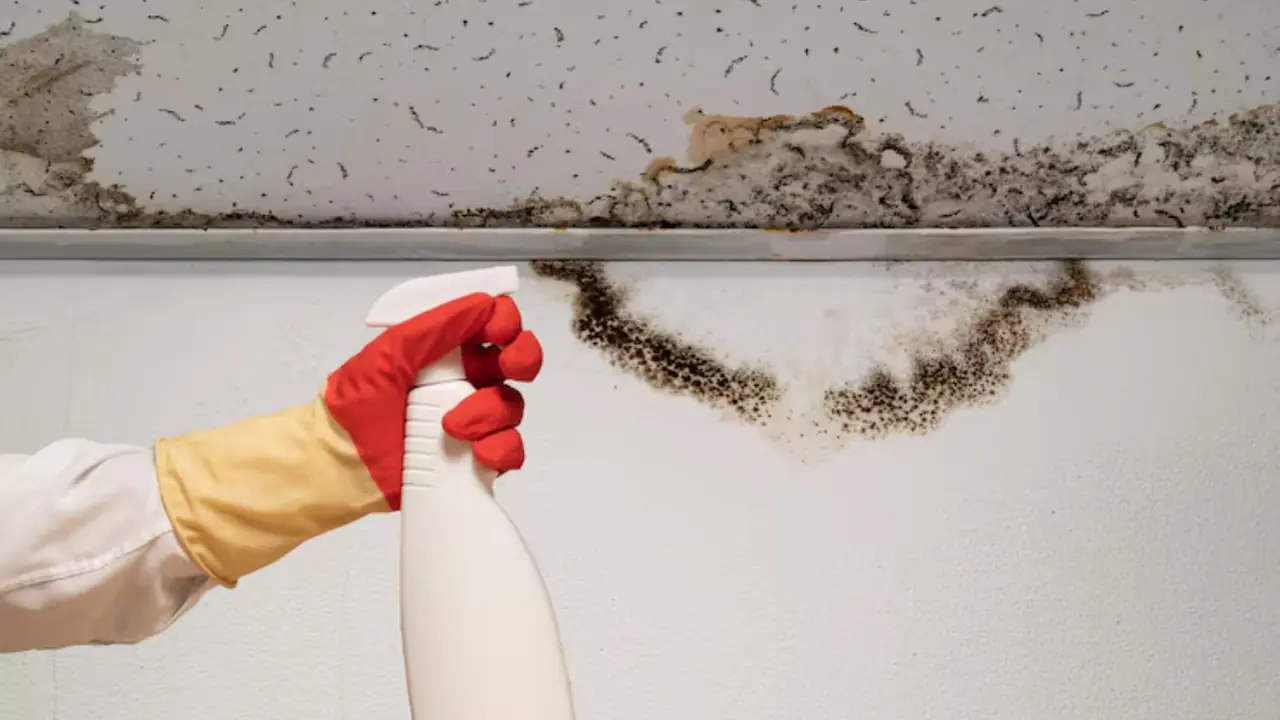
A few dark specks in the corner of a bathroom ceiling are easy to ignore. In the desert, where the air is dry most of the year, many homeowners assume mold cannot happen. It can, because mold does not need a wet climate. It needs moisture in a building material, and a ceiling can hold that moisture for a surprisingly long time.
This guide lists the early visual clues, explains why color alone does not tell you what you have, and describes the sensible next steps. It does not offer a diagnosis. Only testing and a qualified professional can say what a growth actually is.
What early growth tends to look like
Early growth often starts as small spots, speckles or a fuzzy patch, usually dark green, gray, brown or black. It tends to cluster where moisture lingers, such as the corner of a shower ceiling, along a wall edge, or around a vent. A ring or tide mark nearby suggests water has been there before.
- Spots that return after cleaning, often in the same place.
- Paint that bubbles, peels or looks stained beneath the spots.
- A musty or earthy smell that is stronger in one room.
- A ceiling that feels cool or slightly soft near the affected area.
- Discoloration around a bathroom fan, an air vent or a roof penetration.
Color does not identify the type
Many people search for black mold specifically, but a dark color does not prove a particular kind. Growth can look black, green or brown depending on the material, the moisture and the age of the colony. Dirt, soot and smoke staining can also resemble it.
For that reason, avoid deciding anything from a photo. If someone needs to know exactly what is growing, sampling by a qualified tester is the way to find out. Questions about how a growth could affect any person belong with a physician, not a website.
Why the ceiling got wet
Mold needs moisture, so the useful question is where the water came from. Ceilings get wet from roof leaks, from plumbing in the room above, from a clogged or cracked air conditioner condensate line, and from steam that is not vented. A bathroom fan that vents into the attic instead of outdoors is another common cause.
| Where it shows | Common water source | First thing to check |
|---|---|---|
| Under a bathroom upstairs | Toilet seal, shower pan or supply line | Run the fixture and watch for new staining |
| Near an interior air vent or closet | Air conditioner condensate line or drain pan | Look for wet insulation or a stained pan |
| Along an exterior wall edge | Roof leak or poor flashing | Check the roof and gutters after rain |
| Around a bathroom fan | Steam from a fan that does not vent outside | Confirm the duct reaches outdoors |
Spots on a ceiling that keep coming back? The 24/7 line can arrange an inspection.
☎ Call (760) 769-1159What to do and what to avoid
Fix the water source first. A cleaned ceiling that gets wet again will grow again. Keep the area as undisturbed as you reasonably can, because scrubbing, sanding or spraying can spread spores to other rooms.
Do not seal the spots under fresh paint. A coat of paint hides the evidence and does not remove the growth. Photograph the area, note when you first saw it, and tell your landlord or insurer if the cause may be a covered leak.
How professionals handle it
Mold remediation follows the published ANSI/IICRC S520 standard. In general terms, the work contains the area, controls the air so spores do not drift to other rooms, removes affected material and cleans the surrounding surfaces. Our mold remediation page explains that sequence step by step.
Ask any company whether its crews work to S520 and how they will confirm the area is clean afterward. Ask also whether your state licenses mold work, since rules vary.
Coachella Local Note: A Dry Climate Does Not Rule Out Mold
Coachella is a hot, arid city that averages only about 5 inches of precipitation a year across roughly 14 days. Because outdoor rain is rare, a ceiling stain here usually points to something indoors or on the roof, such as an air conditioner line, a plumbing leak or a flat roof that ponded water.
That is a practical reason to look up first. Remnants of Tropical Storm Rachel crossed the valley in October 2026, and a local roofer described ponded flat roofs and slipped tiles that kept dripping after the rain stopped. A ceiling spot noticed in the weeks after a storm deserves a roof inspection as well as a look inside.
Hurricane Hilary in August 2023 closed roads across the valley and soaked homes in a dry month, and a roofer noted that some repairs made after Hilary failed early. If a patch was done quickly after that storm and a stain has returned, the original repair may be worth rechecking.
Nearby towns, same logic
Homes in Mecca near the Salton Sea face the same dry-air, hidden-moisture situation, as noted on our Mecca water damage page. In Indio the pattern is the same, and the Indio page explains how we respond when a leak has already left a stain.
When it is time to call
Call a professional when the area is larger than a small patch, when it keeps returning, when the ceiling is soft, or when you cannot find the water source. A clear sign that moisture is still present means water mitigation may be needed first, and that is a job for drying equipment rather than a spray bottle.
Questions About Ceiling Mold
Does a black spot on the ceiling always mean mold?
No. Soot, dirt and old water stains can look similar. Only sampling by a qualified tester can say what a growth is, so avoid deciding from color alone.
Can I just bleach the spots away?
It is not a reliable fix. The material underneath may still be damp, and scrubbing can spread spores around the room. Fix the moisture source and have the area assessed before cleaning.
Why do I have mold in a dry desert city?
Mold depends on moisture inside a building material, not on the outdoor climate. Air conditioner lines, plumbing leaks, roof leaks and unvented steam can keep a ceiling damp even when the air outside is dry.
Should I have the air or ceiling tested?
Testing can help when you need a record, such as for a sale or a landlord dispute, but it is not always needed before remediation starts. Ask the professional what sampling would add to your situation.
After a storm like Rachel, how soon should a Coachella homeowner check the ceiling?
Look within the first week or two, and again after a few more weeks, because slow roof leaks can take time to reach drywall. Roofers reported ponded flat roofs and slipped tiles after the October 2026 storm remnants, so check ceilings below flat roof sections first.
Not sure what is on your ceiling? Call the 24/7 line to arrange an inspection.
☎ Call (760) 769-1159