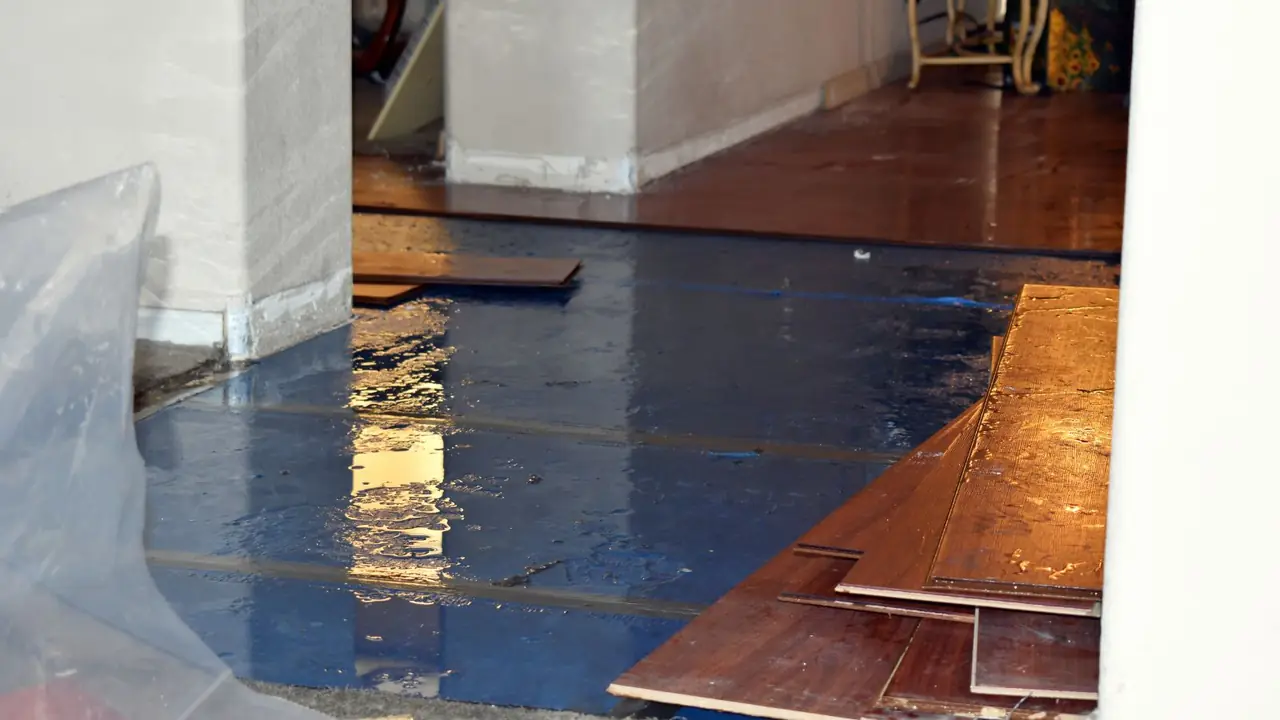
Cupping is what happens when the edges of a wood board sit higher than its center, so the surface looks like a shallow tray. It shows up days after a leak, not during it, which surprises many homeowners who already mopped the floor and moved on.
This guide explains why boards cup, which leaks cause it, what to do in the first day, and how to judge whether a floor should be dried in place or replaced. The advice fits solid hardwood, and engineered products behave in similar ways.
What cupping really means
Wood absorbs and releases moisture. When the underside of a board holds more moisture than the top, the bottom swells and the edges lift. That imbalance can come from water that soaked in from above and ran beneath, or from moisture rising from the subfloor or slab.
Cupping tells you moisture got into the floor system. It does not tell you how much, or how long ago. A moisture meter on the boards and on the subfloor answers those questions, and the readings matter more than the way the floor looks.
How water reaches a wood floor
Real calls show the same patterns again and again. A washer supply valve breaks and runs unnoticed for a while. An air conditioner condensate line backs up and trickles into a hallway. A dishwasher or refrigerator line weeps behind a cabinet. A pot of water or a pet bowl leaves a ring that spreads outward over weeks.
One caller described walnut flooring that started cupping after a leak nobody could find right away, and that is common. The slow leaks are the tricky ones, because the floor keeps absorbing moisture long after a visible puddle would have been wiped up.
What to do in the first day
- Stop the source by closing the valve or shutting off the appliance.
- Remove standing water with towels, a mop or a wet vacuum, and lift rugs and furniture legs off the boards.
- Photograph the floor and any wet baseboards with a timestamp.
- Keep air moving with the air conditioner and a fan, but do not aim heaters at the floor, because forcing the surface to dry fast can crack the boards.
- Call a restoration crew if the wet area is larger than a few boards or if the water ran under cabinets or walls.
Speed matters because each day of trapped moisture makes recovery harder. The floor that is still flat today can cup next week if the subfloor stays wet underneath it.
Dry in place or replace
Not every wet floor is a lost floor. The deciding factors are how long the water sat, how clean it was and how much moisture is trapped under the boards. Use this table as a starting point and let readings confirm the call.
| Situation | Usual path | What to watch |
|---|---|---|
| Short exposure, clean water, boards flat or lightly cupped | Dry in place with floor drying mats and air movers | Daily readings, then flatness over the following weeks |
| Water sat for days, boards cupped or crowned | Extended drying, then judge a partial replacement | Gaps, cracked finish, readings that will not fall |
| Water was dirty, such as a drain or sewage backup | Remove the flooring | Contaminated materials should not be dried in place |
| Glued or floating floor over trapped moisture | Often lifted so the slab and subfloor can dry | Slab readings and any odor under the boards |
How crews dry a wood floor
Technicians start with moisture meters on the boards, the baseboards and the slab, and often a thermal imaging camera to see wet patterns. They may pop a few boards or remove baseboard so air can reach the cavity, then place air movers and a low-grain dehumidifier to pull moisture out of the wood.
Floor drying mats can draw moisture through the boards without removing them. The setup runs for days, with readings logged each visit. If standing water is still present, extraction comes first, which is the job described under water mitigation.
After the readings reach a normal dry range, any needed board replacement, sanding and refinishing belongs to water damage repair. Rushing the refinish before the floor has equalized can lock a cupped shape into the new finish.
Boards lifting after a leak? Call any hour and describe what you see.
☎ Call (760) 769-1159Why patience helps before sanding
Boards often ease back toward flat as the moisture evens out, sometimes over several weeks. Sanding early removes wood from the high edges while the center is still swollen, and when the floor finally dries, the center sinks below the edges. Wait for stable readings and let a flooring professional judge flatness.
Insurance and records
A sudden pipe or appliance failure is often covered by a homeowners policy, while a slow leak that went on for months often is not. Check your policy or ask your insurer, and keep photos, moisture readings and any plumber's report. Never assume a claim will be approved.
The standard behind drying floors
Drying wood flooring follows the principles in ANSI/IICRC S500, which relies on readings over time rather than a single visual check. Ask how often the boards and the subfloor will be re-measured before anyone calls the floor dry.
Coachella Local Note: Slabs, Dry Air and Newer Floors
Most homes in Coachella sit on concrete slabs, as is common in desert construction, so moisture can rise from below as well as arrive from above. If boards cup with no visible leak, ask for a slab moisture reading before assuming a plumbing failure.
Thousands of homes here were built after 2000, so many floors are less than twenty-five years old, which can make drying and keeping a floor more realistic than in older towns. Even so, a floor that sat wet for days may still need a section replaced.
The hot, dry climate also hides problems, because the average high is about 89 degrees and surfaces dry quickly. A floor can look fine on top while the underside still holds moisture. Neighbors in Indio and La Quinta deal with the same slab conditions.
Hardwood Floor Questions
Will cupped hardwood flatten on its own?
Often it improves once the moisture evens out, but not always. Let the floor dry fully and watch the readings before any sanding. Severe cupping may need board replacement.
How can I tell cupping from normal seasonal gaps?
Cupping raises the edges of each board so the surface curves. Seasonal movement usually opens thin gaps without a curl. A moisture meter on the boards and the subfloor settles the question.
Does laminate or engineered flooring react the same way?
They react differently. Laminate often swells at the seams and may need replacement, while engineered boards can cup like solid wood. Dirty water means removal for any flooring type.
Can a dehumidifier alone save a wet floor?
Rarely. A household dehumidifier lowers room humidity but does not move moisture out of boards and a subfloor. Directed drying with air movers and mats is the usual approach.
Can a slab cause cupping in a Coachella home even without a leak?
Yes. Most homes here sit on slabs, and moisture from a slab, a sprinkler line or a soaked planter bed beside the house can rise into a wood floor. A slab reading helps find the cause.
Cupping boards after a leak? The 24/7 line is open now.
☎ Call (760) 769-1159