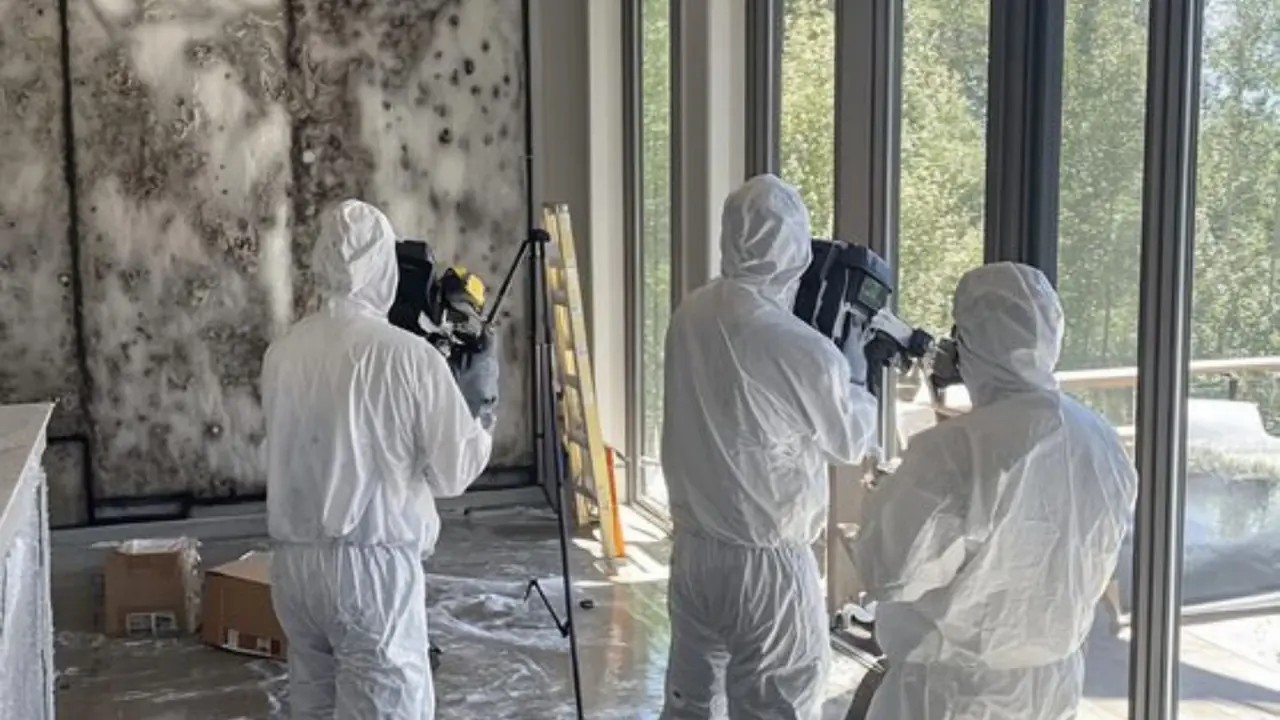
Mold found during a home sale puts everyone on a clock. A buyer's lender may hold funding until the problem is addressed, the seller wants to stay on schedule, and nobody is sure what paperwork will satisfy whom.
This guide explains how inspection, testing, remediation and independent clearance fit together, what each step can and cannot show, and what to ask before you hire anyone. It does not replace advice from your agent or an attorney.
Why mold shows up in a dry desert city
Mold needs moisture, and a dry climate does not stop a leak from supplying it. In real calls the source is usually a leak: a toilet supply line, a sink drain, an air conditioner condensate line, a roof or a siding gap. A closet wall or a bathroom ceiling corner can stay damp for weeks while the rest of the house stays dry.
That is why fixing the water source comes first. Cleaning mold off a wall that keeps getting wet only buys a short pause. Any serious mold plan starts with finding and repairing the leak.
What testing can and cannot tell you
A visual inspection and moisture readings show where water has been and where materials are still damp. Air or surface sampling can add information about what is present on the day samples are taken. It cannot give a promise about the future, and it does not replace finding the moisture source.
Questions about health belong to a physician, not to a test report. A good tester explains what the results show and what they do not, and never pushes a service the readings do not support.
What clearance means and who does it
Clearance, often called post-remediation verification, is a check after the cleanup to see whether the work met the written plan. The ANSI/IICRC S520 standard describes mold remediation practice, including how completion is evaluated. Independent clearance means the person who checks the work is not the company that did it, which gives buyers and lenders more confidence.
Lenders and buyers set their own requirements, and nobody can promise what a particular lender will accept. Ask the lender, the buyer's agent or the underwriter what they want in writing before you hire a tester or a remediation company.
| Step | Who does it | Purpose |
|---|---|---|
| Moisture and mold assessment | Inspector or remediation company | Find the source and the affected area |
| Written scope of work | Remediation company | Define what will be removed, contained and cleaned |
| Water source repair | Plumber or roofer | Stop the moisture that feeds the problem |
| Remediation | Remediation crew | Contain, remove and clean to the plan |
| Independent clearance | Separate tester | Check the result against the plan |
| Paperwork to buyer and lender | Seller or agent | Document what was done |
Coordinating with escrow
Timelines vary with the size of the affected area, the lab and the repair work, so ask each party for their own schedule rather than assuming one. Tell your agent early, because extensions are easier to ask for before the deadline than after it.
Mold that began with a leak often means water damage behind the wall as well, so a drying plan may be part of the job. That is the scope of water mitigation, and the cleanup itself falls under mold remediation. Ask whether your state licenses mold work and whether the company is licensed and insured.
Mold found during a sale? Call the 24/7 line and describe what was found and where.
☎ Call (760) 769-1159Documents worth keeping
- The inspection report and moisture readings.
- The written scope of work and any change orders.
- Plumbing or roofing repair invoices that show the source was fixed.
- The independent clearance report, if one was done.
- Dated photos of the affected area before and after work.
These records help the buyer, the lender and any future sale. They also make an insurance claim easier if the leak itself was a sudden failure, though coverage depends on your policy and you should never assume approval.
Coachella Local Note: Owners, Renters and Dry Air
Coachella gets about 4.97 inches of rain a year, so mold here almost always traces back to a plumbing, air conditioning or roof leak rather than weather. When you tour a home, check under sinks, around toilets, near the air handler and below roof penetrations, because those are the places a slow leak hides.
About 62 percent of occupied homes in the city are owner-occupied, which means roughly 38 percent are rented. If you rent and find mold, notify the landlord in writing with dated photos, and ask the city or a tenant resource about your options.
Buyers and sellers in La Quinta and Thermal face the same sale-driven questions, so the steps above apply across the east valley.
Mold Sale and Clearance Questions
Does every mold problem need testing?
Not always. A clear visual problem with a known leak may go straight to a scope of work. Testing and clearance become more useful when the cause is unclear, when a buyer or lender asks for it or when you want independent proof the job met the plan.
Who pays for testing and remediation in a sale?
That is negotiated between the buyer and the seller, usually with their agents. Ask your agent how your purchase contract handles repairs and credits.
Will my lender accept a clearance report?
That is the lender's decision. Ask what they require in writing before you hire a tester, and send them the report as soon as it is final.
How long does clearance take?
It depends on the tester's schedule and the lab. Ask for both when you book, and plan the closing timeline around their answer rather than a general rule.
Does Coachella's dry climate mean mold is unlikely in a home I am buying?
No. With only about 4.97 inches of rain a year, mold here comes from leaks, not weather. A dry climate hides a slow leak behind a wall, so inspect under sinks, near the air handler and below roof openings.
Mold turned up before closing? The 24/7 line is open now.
☎ Call (760) 769-1159