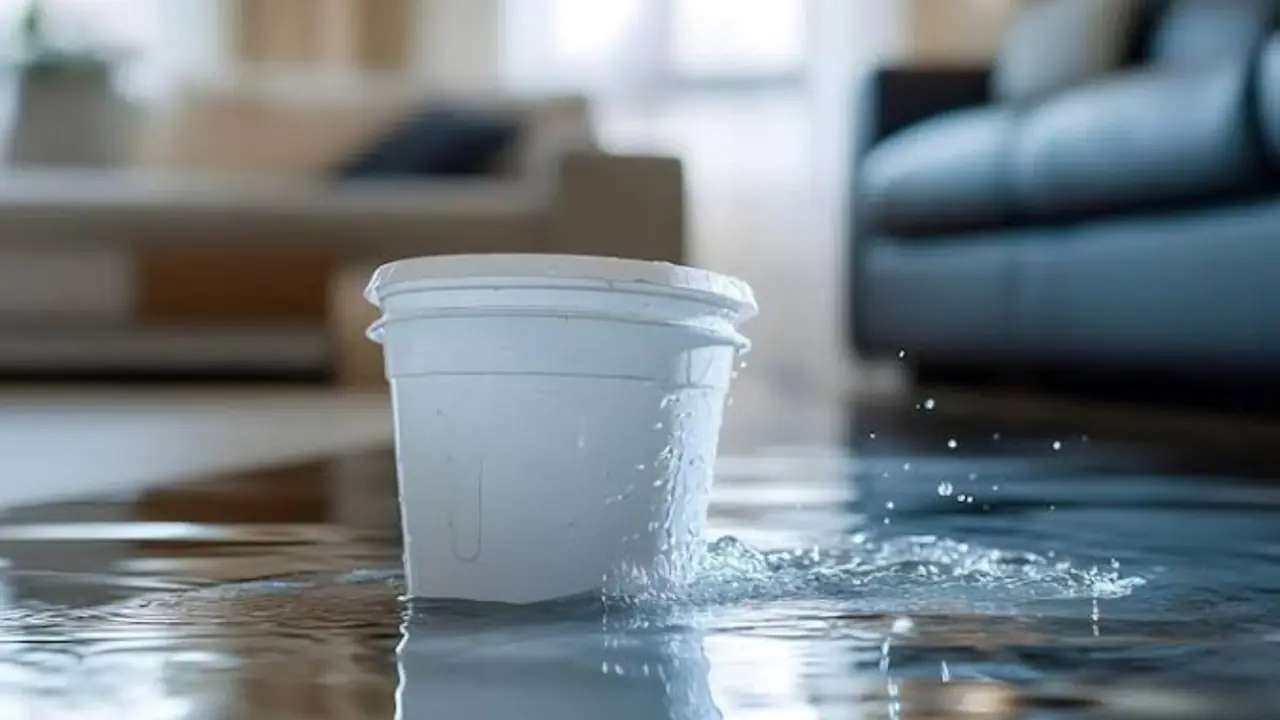
The first ten minutes after you spot the puddle
A refrigerator leak rarely looks serious at first. A damp spot near the front grille turns into a sheet of water under the appliance, and the cabinets beside it start drinking it up. In a Coachella kitchen the floor is usually a concrete slab with tile, laminate or vinyl on top, so the water has nowhere to drain. It spreads sideways until it finds a seam or a cabinet base.
Start at the source. Find the small shutoff valve behind the refrigerator or under the nearest sink and turn it clockwise. If the valve is stuck or the fridge is too heavy to move, close the main shutoff for the house instead and call for help.
Do not stand in water and touch the plug or the outlet. If the outlet is wet, leave the appliance alone, switch off the breaker for that kitchen circuit only if the panel is dry and easy to reach, and keep everyone out of the wet area.
Why a small drip becomes a large repair
Cabinet bases are the weak point. The toe kick, the strip of board at the bottom of the cabinets, sits on the floor and soaks water upward by wicking. Particleboard cabinet boxes swell when they stay wet, and once the edges puff up they do not shrink back.
Flooring tells a similar story. Water slides under click-together laminate and under the edge of vinyl planks, where a mop cannot reach it. A floor can look dry on top while the underlayment and the slab surface stay damp for days.
That hidden moisture is the reason a quick towel job often has to be repeated. The cleanup is not finished until the materials under the surface read dry on a moisture meter.
Where refrigerator water usually comes from
Not every leak starts at the same place, and the source changes the fix. This table lists the common culprits and the first move for each.
| Source | What you notice | First move |
|---|---|---|
| Ice maker supply line | Water pooling behind the unit, a wet floor that keeps growing | Close the small shutoff valve and pull the fridge out to look at the fittings |
| Water filter housing | Drips at the filter, damp cabinet wall beside it | Shut off the valve, remove the filter and check the seal |
| Clogged defrost drain | Water inside the fridge, a puddle at the front | Unplug only if the cord and outlet are dry, then clear the drain tube |
| Drain pan overflow | Slow, repeating dampness under the unit | Empty the pan and look for a cracked pan or a failed fan |
| Loose or aged line fitting | A steady drip that stops when the valve is closed | Keep the valve closed and have the line replaced before the next fill |
What to check before you pull the fridge out
- Look at the floor around the unit for lifted edges, soft spots or a musty smell, which point to water that has been there a while.
- Open the cabinet doors beside the fridge and press the inside walls. Soft or swollen board means the water traveled.
- Slide a flashlight under the toe kick and look for a dark tide line.
- Take photos of the wet area and the source before you move anything, because they help later with a claim.
- Lift small items, rugs and food boxes off the floor and set them on dry counters.
Pull the unit out slowly. Refrigerators are heavy and the floor is slick, so ask someone to help and tilt it only as much as you need. If water is still flowing, stop and close the main valve.
Standards note for kitchen leaks
Water under cabinets and appliances dries slowly, which is why ANSI/IICRC S500, the published water damage restoration standard, expects hidden areas to be measured. Ask whether the cabinet toe-kick and the subfloor will be checked with a meter and not just wiped.
Coachella Local Note: shutoffs, the city meter and Fridays
Water and sewer service for customers inside the city comes from the City of Coachella Utilities Department, which also operates standby emergency lines for water main breaks and sewer overflows. The office keeps Monday to Thursday hours and is closed on Fridays, so a problem that starts on a Friday evening runs on the standby lines, not the front desk.
That matters for a fridge leak because a failed line inside your kitchen is your side of the meter. Know where the house main shutoff is before an emergency, since the city will not close it for a leak inside the home. A leak at the meter or in the street is different and belongs to the utility.
What a crew does that a mop cannot
A restoration crew starts by finding how far the water went. Moisture meters read the cabinet bases, the baseboards and the flooring edges, and a thermal imaging camera shows cool, wet areas behind surfaces without cutting them open. The map decides what can stay and what has to be opened.
Next comes extraction, then drying. Small extraction units lift standing water, toe kicks are often removed so air can reach the cabinet base, and air movers and dehumidifiers run until readings match dry reference materials. Our emergency water removal service covers this first stage, and the drying plan is built around the materials in your kitchen.
Drying is measured, not guessed. A kitchen with tile on a slab may dry in a few days, while laminate with a wet underlayment takes longer or has to be removed.
Fridge line still dripping or the floor still wet? Call the 24/7 line and describe what you see.
☎ Call (760) 769-1159Repair, replace or keep: a practical sort
Tile and sealed vinyl often survive if water is removed quickly. Laminate and engineered wood with swollen seams usually do not. Particleboard toe kicks are cheap to replace and are often the first thing to go.
Cabinet boxes are a judgment call. If the sides are only damp at the bottom and dry out flat, they can stay. If the board has crumbled or swollen above the bottom shelf, replacement is the safer path, and water damage cleanup covers the removal and sanitizing before any rebuild starts.
Before any cabinet or flooring is replaced, ask your city building department whether the work needs a permit. Rules vary, and plumbing or electrical changes are the usual triggers.
Documenting the loss for your insurer
Sudden and accidental leaks, such as a supply line that fails, are often covered by a homeowners or renters policy, while slow leaks and long neglect often are not. Read your policy and ask your insurer what applies. We cannot promise how a claim will go.
Keep the photos, the moisture readings and any written scope. Renters should tell the landlord the same day, because the building owner's policy and the tenant's policy answer different parts of the loss. Roughly four in ten Coachella households rent, so this split comes up often.
If the fridge itself is the loss, check whether the line and valve were recently replaced, and keep the old part if you can. It can help show how the leak started.
If you want a crew to look at the kitchen, Indio and La Quinta addresses get the same 24/7 line as Coachella homes.
Refrigerator leak questions
Can I keep using the refrigerator while the floor dries?
Only if the cord and outlet stay dry and the leak source is shut off. If the unit sits in water or the outlet is wet, leave it unplugged and call for help, because food safety and electrical safety both matter.
How long does it take for a kitchen floor to dry after a fridge leak?
It depends on the flooring and how much water got under it. Tile on a slab often dries within a few days with air movers, while laminate or wet underlayment can take longer or need removal. Moisture readings decide when it is done.
Does the leak have to be a big flood to damage cabinets?
No. A slow drip that reaches the toe kick can swell particleboard over several days. That is why a steady damp spot near the fridge deserves attention before it becomes a visible stain.
My kitchen floor is a concrete slab. Does that protect it from a refrigerator leak?
The slab itself holds up well, but it also keeps water from draining away, so the water spreads sideways under flooring and into cabinet bases. In Coachella most homes sit on slabs, which is why a small kitchen leak can travel farther than people expect.
Need a second opinion on a wet kitchen floor? Talk to dispatch any hour.
☎ Call (760) 769-1159